Payroll for Sri Lankan employers
Payday,
sorted.
From the factory floor to head office, StaffPay works out every payslip, handles EPF, ETF and APIT for you, and won't let a pay run go out until someone has approved it.


Payslip
September 2026
Kasun Fernando · EMP-0002
- Basic salary
- 120,000.00
- Allowances
- 15,000.00
- EPF (8%)
- −9,600.00
- APIT
- 0.00
- Stamp duty
- −25.00

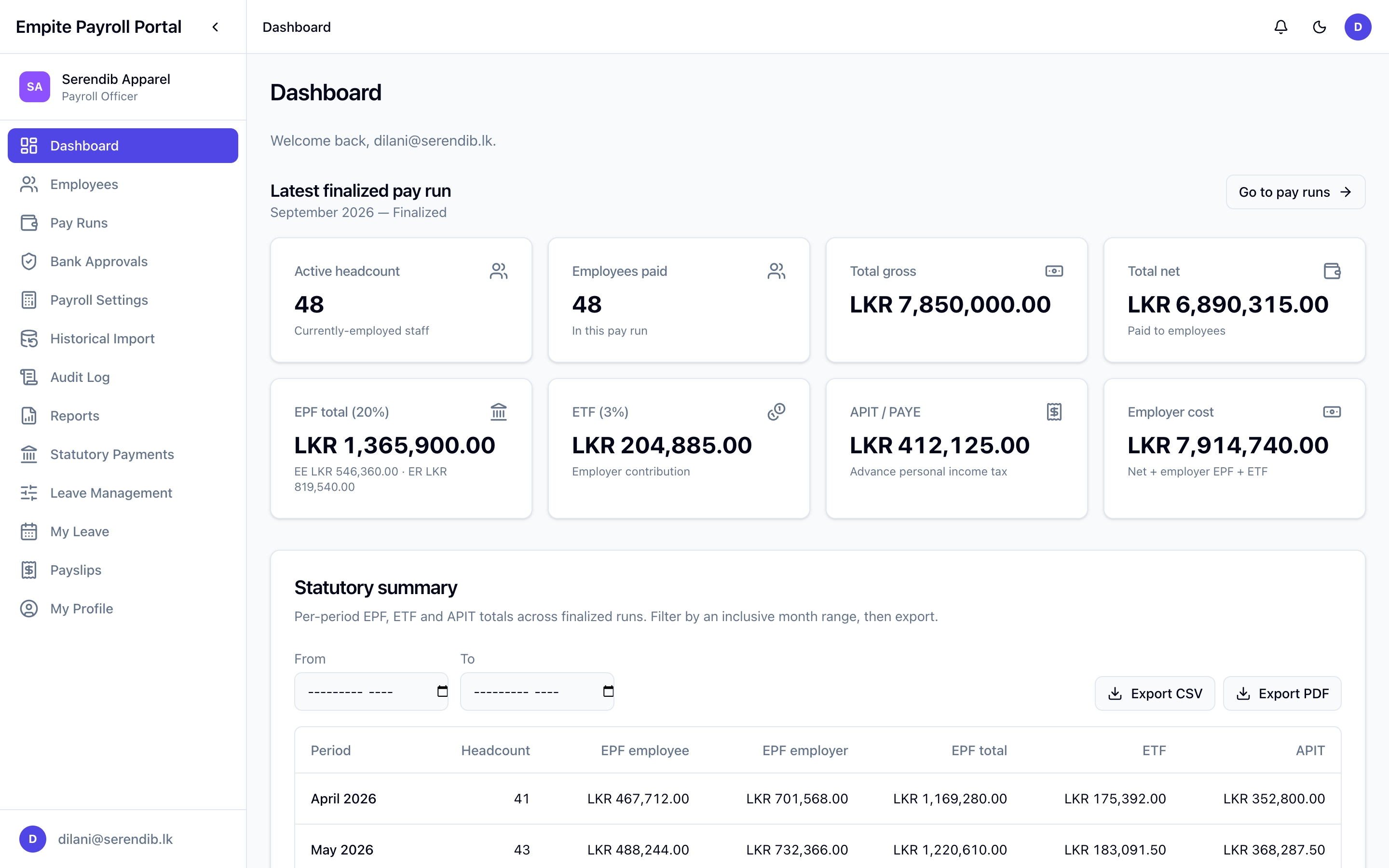
Your whole payroll on one screen.
The latest finalized run, every statutory total and the employer cost, ready the moment a run is approved.
- governed pay-run lifecycle
- 4-stagegoverned pay-run lifecycle
- required for every bank-detail change
- 2 approversrequired for every bank-detail change
- historical rows per import file
- 25,000historical rows per import file
- pay-run, bank and role change audited
- Everypay-run, bank and role change audited
Everything in one place
Payroll that runs the way a careful finance team would.
From the first employee you add to the statutory payment you remit, every step is structured, reviewable and recorded.
Governed pay runs
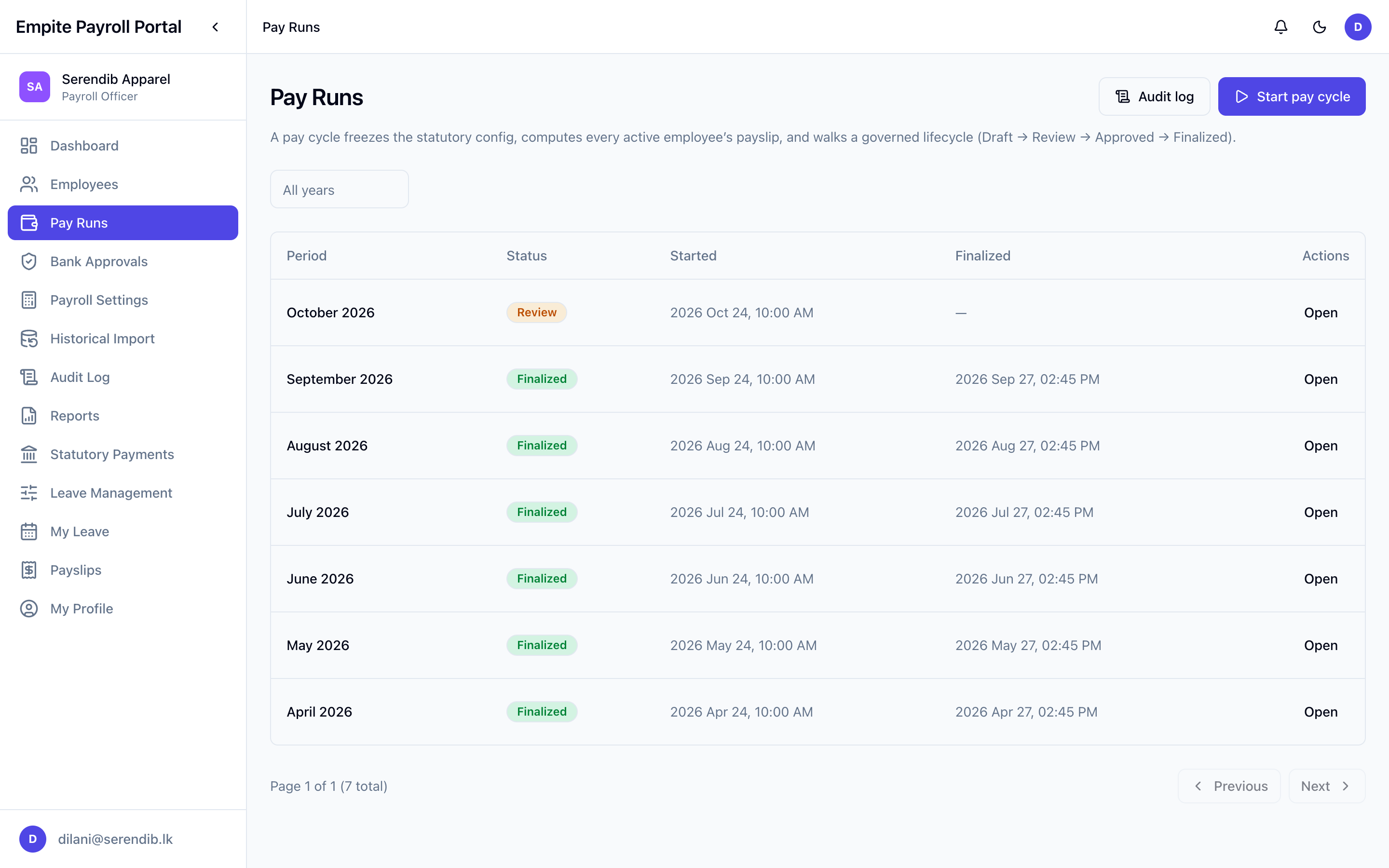
Every pay run is checked before a single rupee moves.
Starting a pay cycle freezes the statutory config for that period and computes every active employee's payslip. The run then moves through Draft, Review, Approved and Finalized, so nothing is paid on a first draft.
- Draft
- Review
- Approved
- Finalized
- One active run per period, so runs are never duplicated
- Blockers such as missing salaries are flagged before you start
- Reverse a finalized run with a full audit trail
Statutory reporting
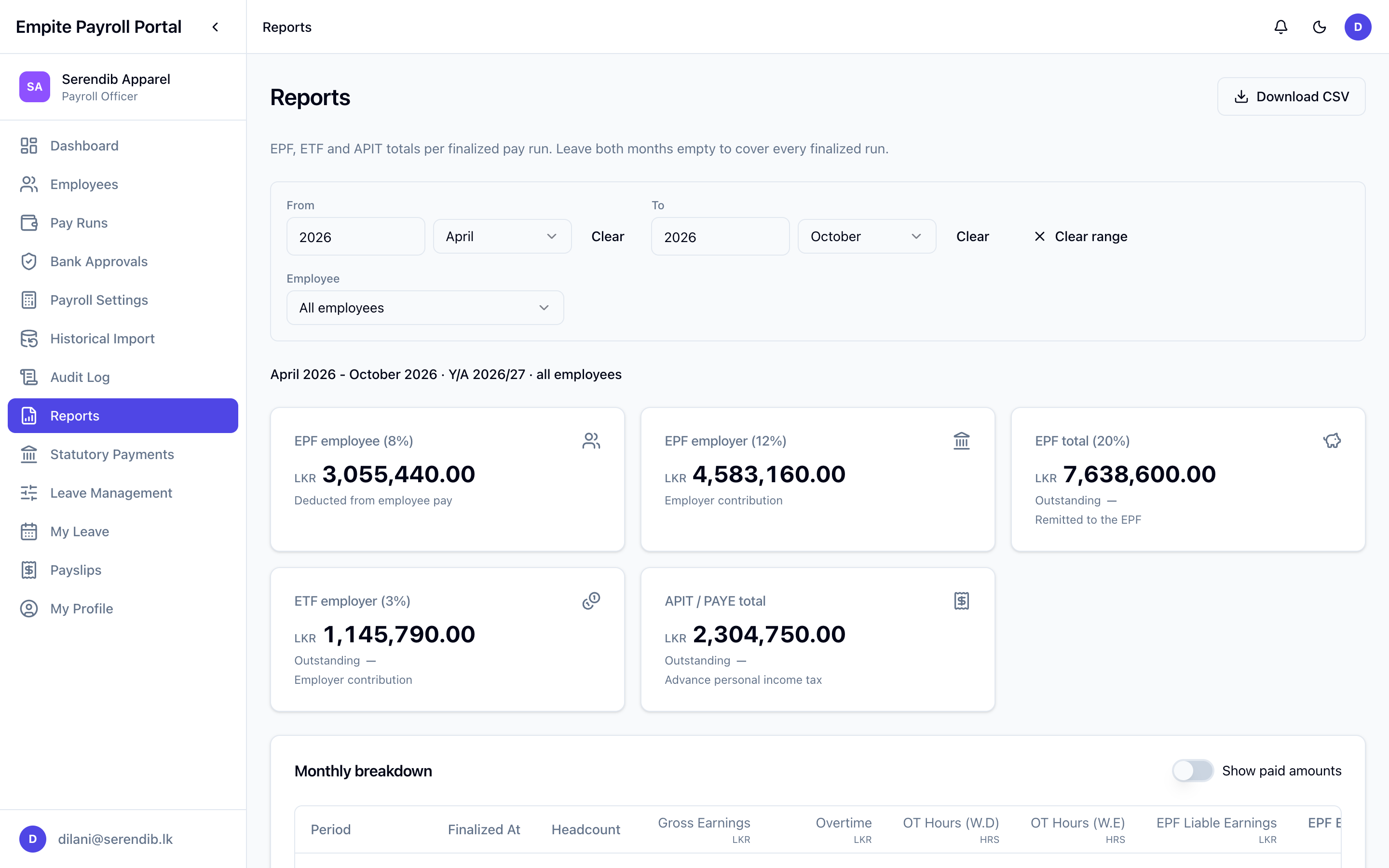
Your EPF, ETF and APIT totals, ready to remit.
Reports total every finalized run by month, across the assessment year or for a single employee. Record what you paid to the EPF department, the ETF Board and the IRD, and see what is still outstanding.
- Filter by any month range or a single employee
- Export to CSV or PDF in one click
- Track paid and outstanding amounts for each authority
People & access
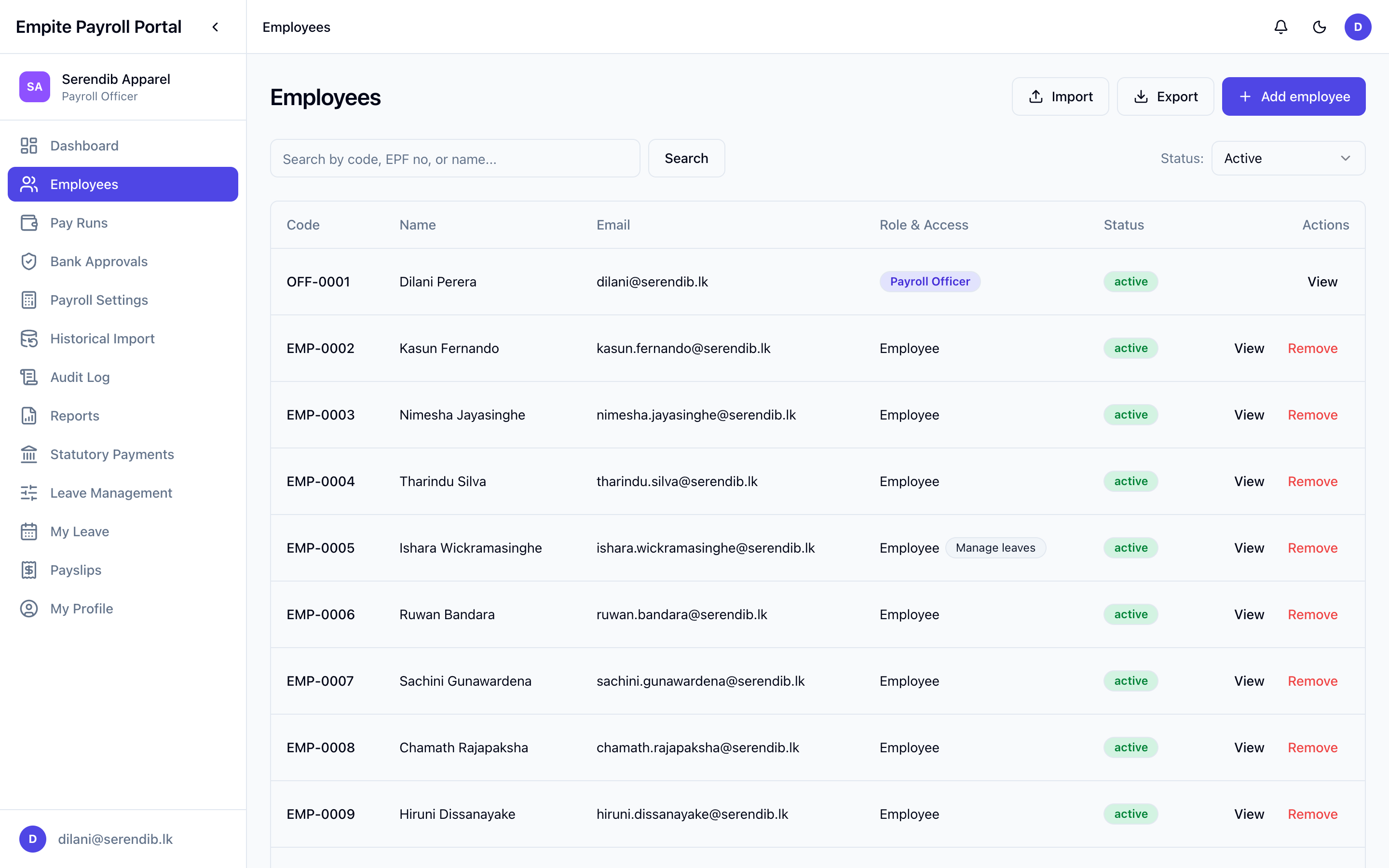
One employee record, with exactly the access each person needs.
Add people one at a time or import them from a CSV. Give a team lead permission to manage leave without exposing payroll, and keep payroll officers separate from everyone else.
- Bulk import and export of employee records
- Delegate leave, attendance or payroll permissions
- Search by code, EPF number or name
And much more
All the details Sri Lankan payroll needs.
Automatic statutory deductions
EPF, ETF, APIT, stamp duty and gratuity are worked out on every payslip from effective-dated rules.
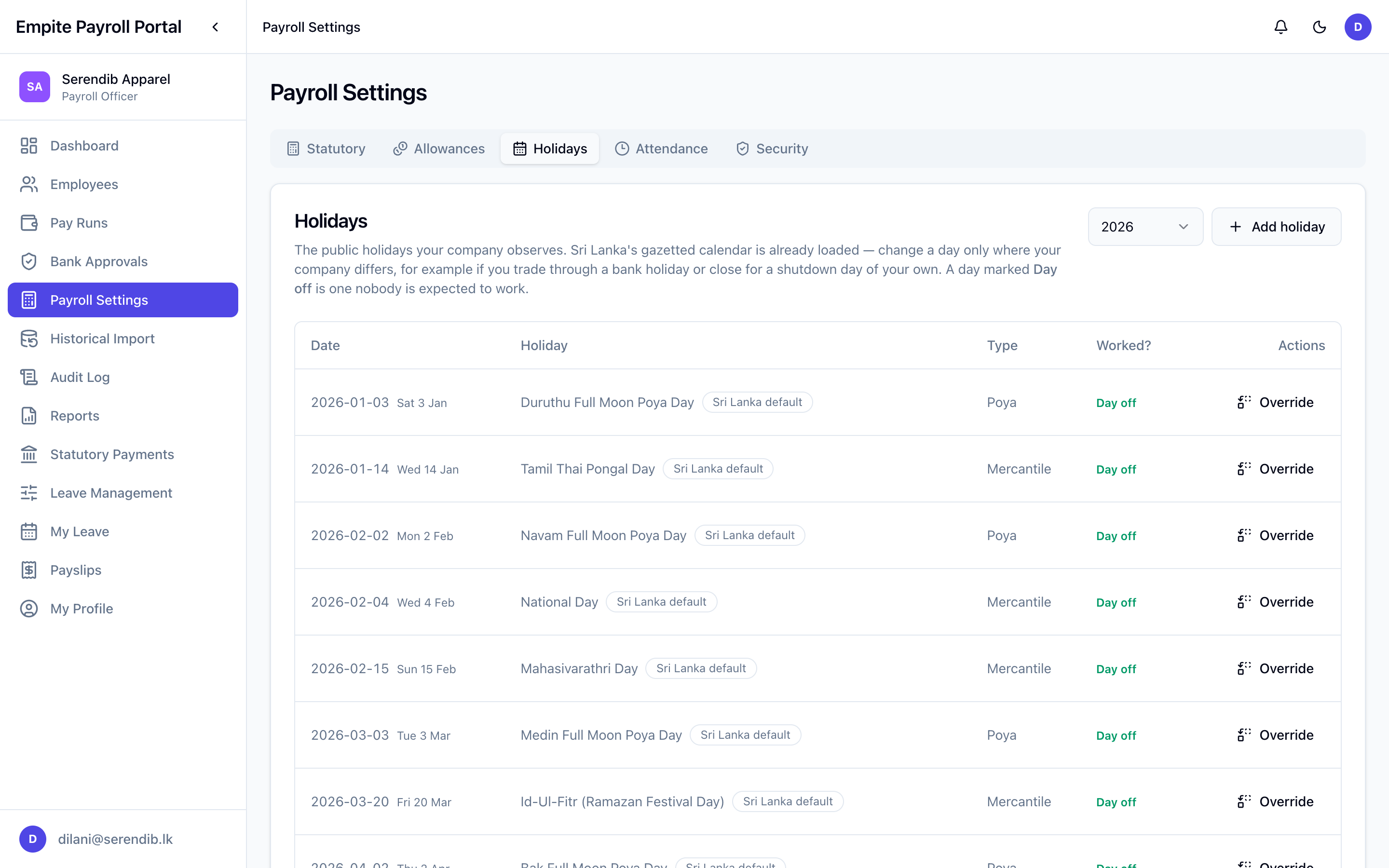
Sri Lankan holiday calendar
Poya and mercantile holidays come preloaded. Override any day your company works differently.
Allowances your way
Mark each allowance as taxable, EPF-liable or docked for no-pay leave, and it is applied from the next run.
Leave management
Employees request leave with cover and attachments. Managers approve it, and balances update automatically.
Statutory payments
Record remittances to the EPF, ETF and IRD against each finalized cycle and see what's still outstanding.
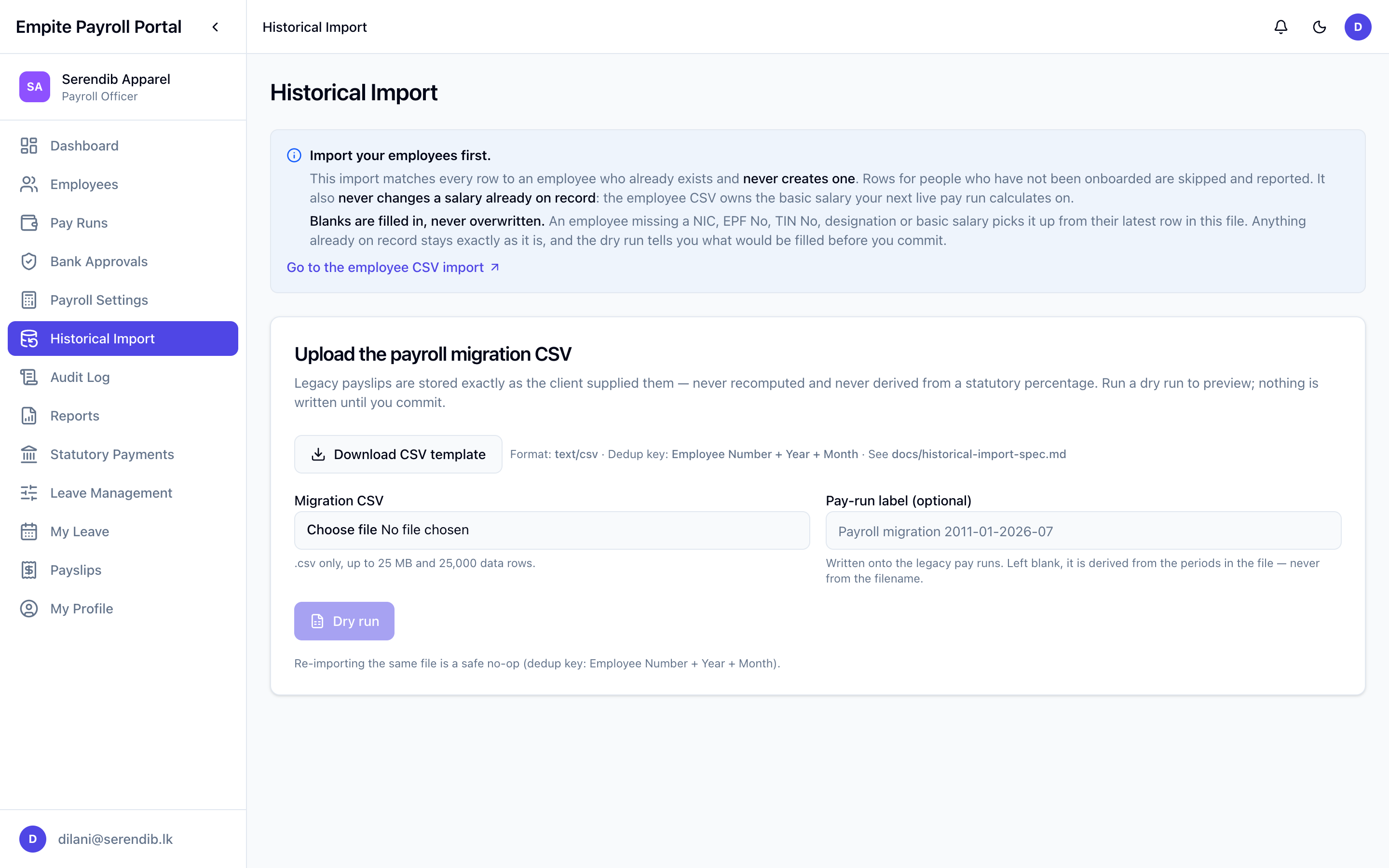
Historical import
Bring years of legacy payslips across exactly as they were. Run a dry run first, and nothing is written until you commit.
Compliance built in
Sri Lankan payroll law, already set up.
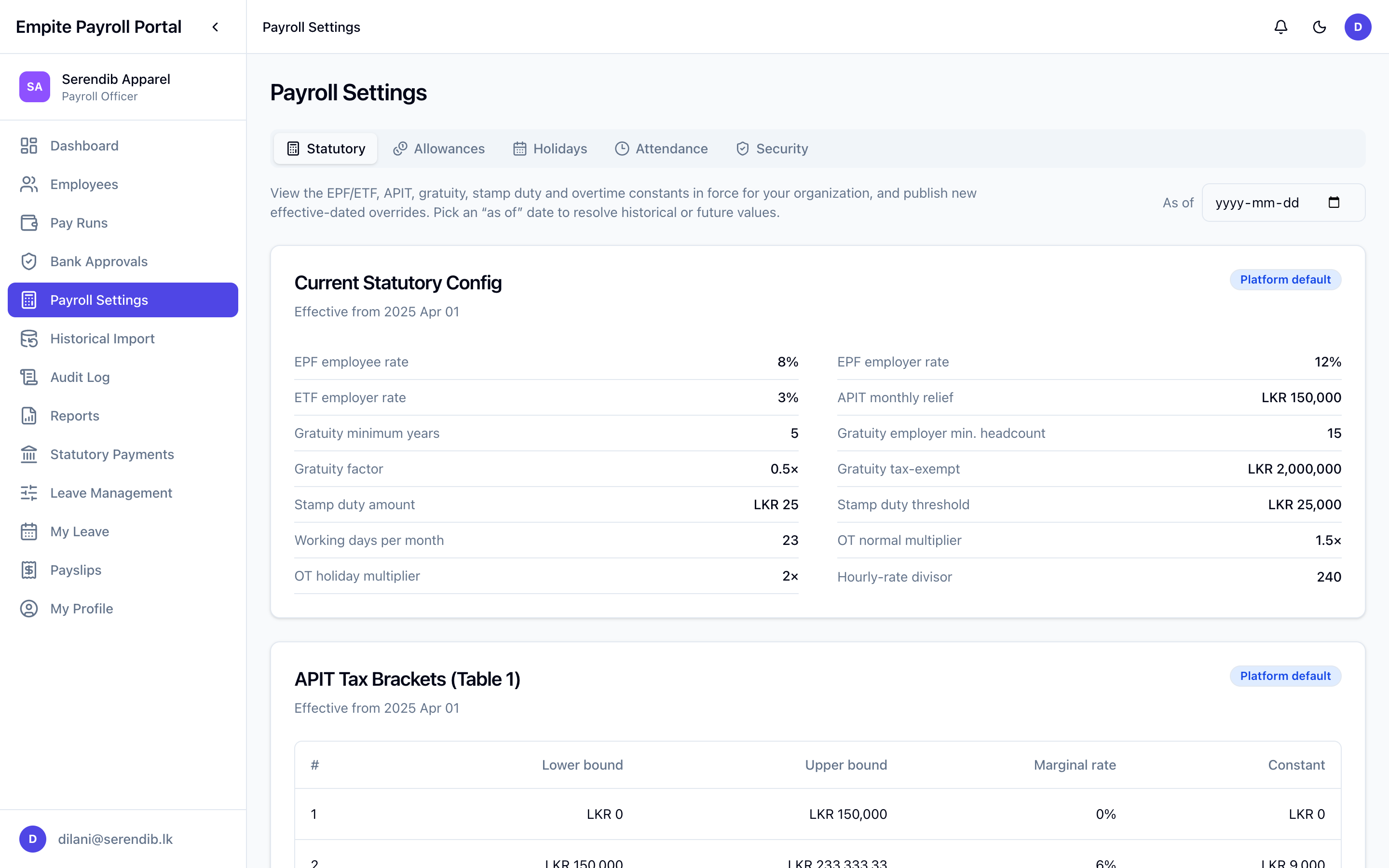
Platform defaults follow the current statutory rates. When rules change, publish an effective-dated override. Past runs keep the rates they were calculated with, so history never changes.
- EPF employee
- 8%
- EPF employer
- 12%
- ETF employer
- 3%
- APIT monthly relief
- LKR 150,000
- OT normal / holiday
- 1.5× / 2×
- Gratuity factor
- 0.5×
Security & control
Built so payroll fraud is hard to commit and easy to spot.
Bank details are where payroll fraud happens. Changing them takes two independent approvals, and the account already on file keeps getting paid until both approvers sign off.
Filling in details for the first time saves immediately. Only changes to an account already on file need approval, so onboarding stays quick.
Two-person bank approvals
Two payroll officers, neither of them the person who proposed the change, must approve new bank details.
Two-factor authentication
Require an authenticator app for every member of your organization, or let each person turn it on.
Read-only audit log
Bank-detail changes, pay-run actions, role edits and email changes are recorded, newest first.
Role-based permissions
Employees only see their own records. Officers decide who can manage leave, attendance or payroll.
For your employees
Payslips and leave, right on their phone.
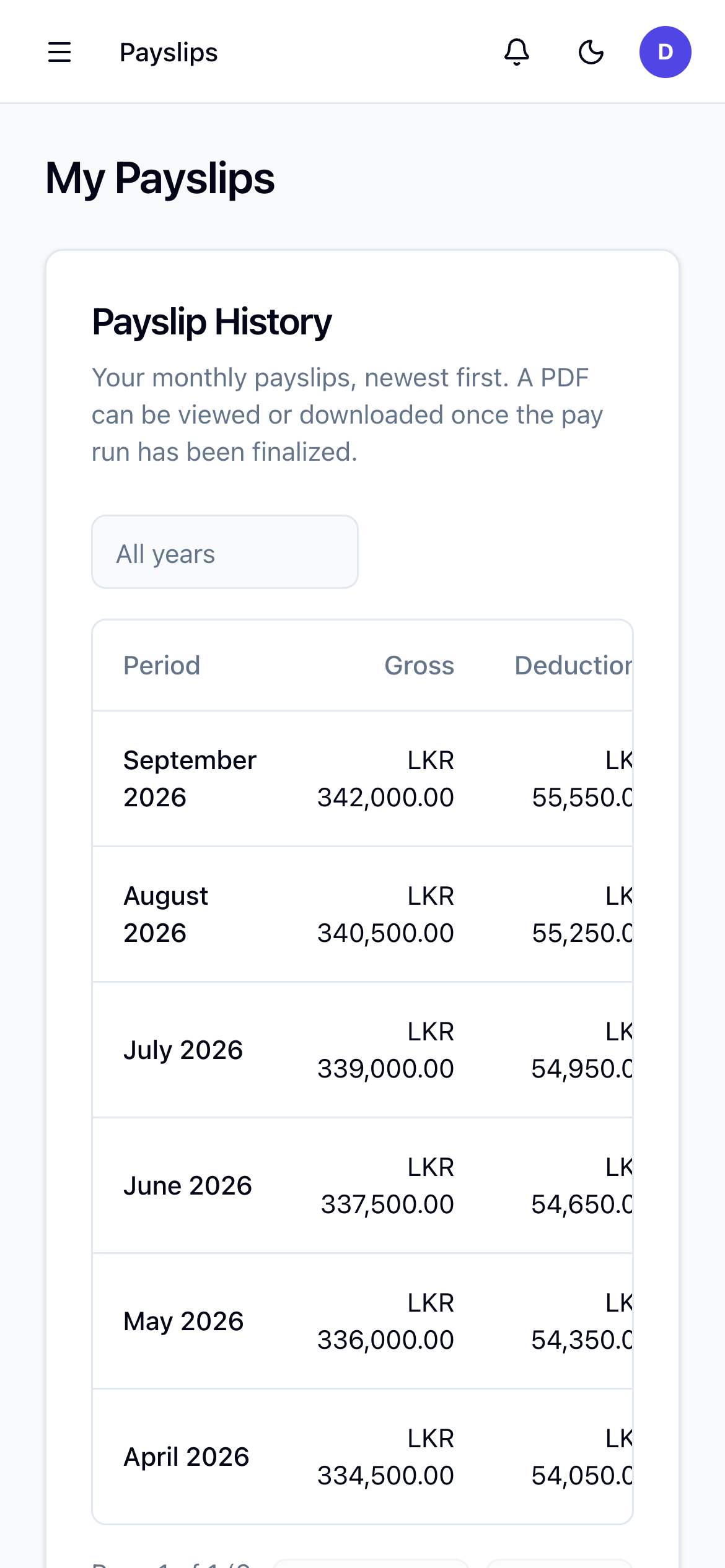
Every employee gets their own login. They can download payslips once a run is finalized, request leave, check balances and update their bank details without emailing HR.
- Monthly payslip history with PDF download
- Leave requests with cover and attachments
- Bank detail changes that go through approval
- Works on any phone, with no app to install

Switching is easy
Bring your payroll history with you.
Import your employees, then upload past payslips. Each row is matched to an existing employee, gaps such as a missing NIC or EPF number are filled in, and nothing already on record is overwritten.
Step 1
Import employees
Upload a CSV of your team, or add people one by one.
Step 2
Dry-run your history
Preview exactly what would be filled in before anything is written.
Step 3
Commit and run payroll
Re-importing the same file is safe, so you can start your first live run with confidence.
Made in Sri Lanka, for Sri Lanka
Built for the way Sri Lanka works.
Whether you run a 15-person studio in Colombo or a production floor with hundreds of operators, everyone is paid correctly and on time, overtime and holidays included.


FAQ
Questions, answered.
Which statutory deductions does it calculate?
EPF (employee 8%, employer 12%), ETF (employer 3%), APIT using the current tax tables and monthly relief, stamp duty, and gratuity eligibility. Overtime uses configurable normal and holiday multipliers.
What happens when tax rates change?
Platform defaults are updated as rules change, and you can publish your own effective-dated override at any time. Each pay run freezes the configuration in force for its period, so finalized history never changes.
Can we import our existing payroll history?
Yes. Import employees from a CSV first, then upload legacy payslips (up to 25,000 rows per file). They're stored exactly as supplied, and a dry run shows you the result before anything is saved.
How are bank detail changes protected?
A change to bank details already on file only takes effect after two different people with payroll permission approve it, and neither of them can be the person who proposed it. Until then, the existing account keeps being paid.
Do employees need to install an app?
No. Employees sign in from any browser on their phone or computer to see payslips, request leave and manage their profile.
Can we sign in with Google?
Yes. People can sign in with Google or with an email and password, and you can require two-factor authentication across your organization.
Still have a question?
Your next payroll could take minutes.
Set up your organization, import your team and run your first governed pay cycle, without the spreadsheet stress.